About Team Racing
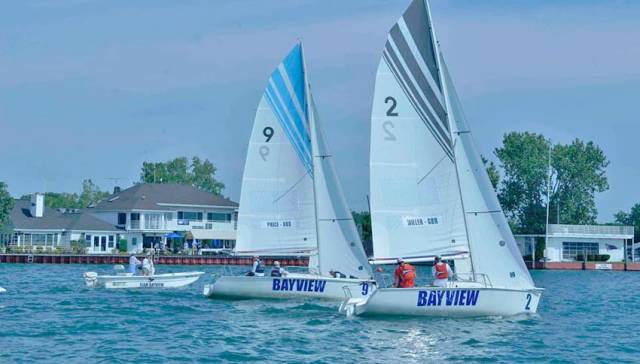
Team racing in sailing is an exciting, strategy-focused format where two teams, usually with three boats each, compete to achieve the best combined score by the end of the race. Unlike fleet racing, where individual performance matters most, team racing emphasises teamwork, tactics, and boat positioning to outmanoeuvre the opposing team.
Each team typically has three boats, often two-person dinghies like the Firefly class. The boats from each team are distinguished by their unique sail colours or numbers.
Points are assigned to finishing positions, with 1 point for 1st place, 2 points for 2nd place, and so on. The team with the lowest combined score wins. The target is to achieve a "winning combination" of points. In a six-boat race (three per team), winning combinations include scores like 10 points or less for a 1-2-6 or a 2-3-5 finish.
Teams can slow down or block opposing boats, especially in an advantageous position. A boat ahead can "cover" an opponent, manoeuvring to block the wind and slow them down.
Teams often employ manoeuvres to help slower boats catch up or pass opponents, switching positions if needed. This keeps the team in a winning configuration.
At key turning points, boats can execute mark traps, where they intentionally slow down or position themselves to block opponents, forcing them into bad turns or causing them to lose speed.
Team racing follows standard sailing rules but with some additions tailored to team tactics. For example, a "fouling" boat (one that breaks a rule) must complete a penalty turn or even multiple turns, depending on the rule violation. Penalty management is crucial as it can make or break a team's success in the race.
Constant communication is key as team members coordinate strategies, adjust for wind shifts, and adapt to changes in the race. They signal intentions, warn of opponents' moves, and ensure every team member’s position is optimized.
In short, team racing combines fast-paced sailing with strategic teamwork. While speed is essential, winning often depends more on positioning, communication, and the ability to execute effective tactics as a team.