


























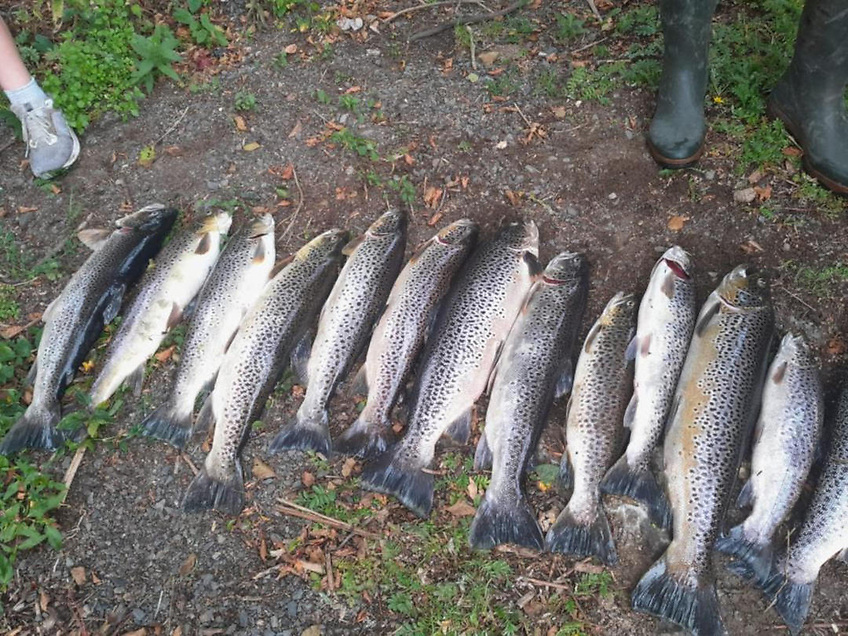
An Inland Fisheries Ireland (IFI) report shows that a Lough Sheelin fish kill was caused by low oxygen levels in the water that were intensified by high water temperatures and environmental pressures.
A total of 834 fish, mainly female adult brown trout, died at Captain’s Bay and lower Mountnugent River in the Lough Sheelin catchment in July 2025.
David McInerney, Shannon region director at IFI said: “Extensive and detailed IFI investigations have found no evidence of direct pollution discharges at the impacted area.
“This fish kill involved the tragic loss of a large number of healthy wild brown trout.
“We are very aware how upsetting this unexpected event has been for anglers, the local community and for IFI staff, many of whom have a long association with Lough Sheelin.”
McInerney added: “IFI has been, and continues to, actively engage with landowners, anglers and other parties to identify priority areas within the catchment to target works that can enhance its resilience.
“IFI continues to enforce fisheries and water pollution legislation and to advocate for improved water quality.”
IFI said it thanks the Lough Sheelin Trout Protection Association and other stakeholders, including the local community, for their assistance throughout their investigations in recent months.
 The Lower Mountnugent River in the Lough Sheelin catchment | Credit: IFI
The summary report revealed that the incident was caused by low levels of dissolved oxygen in both the lake and river that were exacerbated by high water temperatures and underlying catchment pressures.
The summary report — which is accompanied by a separate research study, Preliminary Data Synthesis Report: Lough Sheelin Environmental and Fish Monitoring — highlighted the contributory catchment factors responsible for the large number of mortalities, including:
- The presence of excessive plants and silt in the lower Mountnugent River adding to pressures on available oxygen in the water, particularly at night
- Nutrient enrichment combined with increased water temperature and low water levels
- Lake water and rainfall levels were below normal for July resulting in low river flows
- The lake temperature did not vary with depth and fish were unable to seek refuge in cooler parts of the watercourse
- The high density of large fish congregating in a short stretch of water
Dr James Barry, senior research officer at IFI said: “This incident is another sign that our inland waters and aquatic life are particularly vulnerable to multiple pressures, and climate change.
“IFI’s fisheries research and development division continues to collect evidence-based data to support informed decision-making on environmental stresses, climate mitigation and adaptation strategies.”