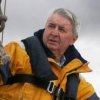



























The chairman of the board of the Irish Whale and Dolphin Group (IWDG), Dr Patrick Hartigan, has said that a new research vessel is essential to meet the organisation's objectives of gathering data through citizen science.
In the Group's 2025 annual report, he indicates that he has "served long enough in my role as Chair" and is seeking a replacement.
"I will not fade into the background but intend to stay on the Board, where I will lead the effort to find a replacement for Celtic Mist, which sadly has reached the end of its useful life with us.
"I strongly believe that a new research vessel is essential for meeting our strategic objectives of gathering data through citizen science, as well as being our ambassador in ports around the country."
The retirement of Celtic Mist after the 2026 season was announced earlier this year. The former yacht of Charles Haughey was donated to the IWDG by the Haughey family in 2011 and has served as a research platform around the Irish coast.
Dr Hartigan was appointed chairman in 2022, when a new strategy for the organisation was developed.
"We are now half-way through the five-year implementation period of this strategy, so it is an appropriate time to take stock of how well we are doing.
"We have clearly had a strong impact in our advocacy to the Irish government," he says. "Distinct progress has been made towards the development and implementation of new national policies that positively impact on cetaceans and their habitats.
"Our involvement with European projects and partners contributes to the evolution of European policy on a number of key issues, an example of which is the reduction of 'ship strikes' – i.e. the number of whales lost to collisions with ships.
"IWDG is creating new knowledge. This includes scientific publications on subjects such as the impact of dredge disposal on harbour porpoises in Dublin Bay and humpback whale movement patterns based on citizen science data.
"This data has been collected from our sightings and strandings schemes, which go from strength to strength, thanks largely to citizen scientists."