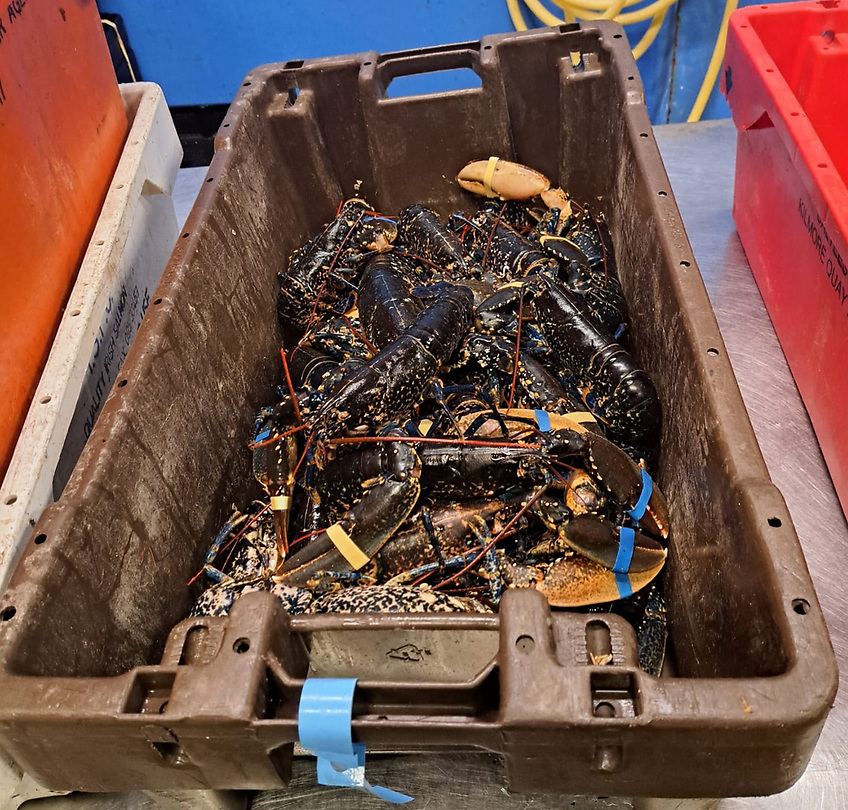
The Sea-Fisheries Protection Authority (SFPA), says it has seized 194 below minimum legal size lobsters at Ballyconneely, Co Galway.
Officers from the SFPA Ros a Mhíl office also detected one box containing 21 lobsters with mutilated tails and V-notches, as well as two oversized lobsters.
During a subsequent inspection at a premises, the SFPOs detected a further 13 lobsters which were undersized and had mutilated tails. All lobsters were debanded and returned to sea. An investigation continues into both incidents, it says.
It says it was acting on information from a member of the public. The minimum legal size for catches of lobster is 87mm carapace length.
A key initiative for the conservation of lobster is the ‘v-notch’ scheme, where a small mark is cut into the tail of any female lobster found. Once marked in this way, it is illegal to land, possess or sell such a lobster.
A certain percentage of the population is therefore protected for breeding, thus boosting egg production and, in turn, recruitment to the stock.
The SFPA says that people either in charge, or masters, of fishing boats are prohibited from retaining, or landing fish, including shellfish, which are below the applicable legal-size limits, (or above the applicable maximum legal-size limit for lobster), and must return it immediately to the sea.
In Irish waters, the minimum size of brown crab is 140mm; spider crab (130mm for males and 125mm for females) and velvet crab 65mm, while lobsters must be in the range 87mm to 127mm (carapace length).
Any lobster that has been v-notched or has a mutilated tail must be released back into the water. Crabs or lobster may not be caught by means of skin-diving - this includes using apparatus of any kind which enables a person to breathe under water.
In addition, under EU and national legislation, recreational or non-commercial fishers who do not have a commercial fishing licence, are restricted to doing no more than the following in pot fisheries:
- Fish for lobster and crab with pots from 1st May to 30th September only every year.
- Fish up to six pots (i.e., a maximum of 6 pots associated with their boat either in the water or on board at any time).
- Retain up to five crabs and one lobster in a 24 hour period.
- Eat their catch themselves or share with their immediate family – they cannot sell or offer for sale any catches (a commercial fishing license is needed to sell fish).
Paschal Hayes, SFPA Executive Chairperson, said he wished to acknowledge the support of the public in alerting the SFPA in this case.
"I continue to encourage anyone who has concerns about suspected illegal fishing or activity that could compromise seafood safety to contact their local SFPA port office or contact us via our Confidential Line channels, "he said.
The scale of such a find of undersize lobsters is concerning and signals a significant threat for the future viability of the fishery. The fishery for lobster is one of the most traditional fisheries among coastal communities and the mainstay of many small vessels fishing all around the coast of Ireland. The actions of a few fishermen selling undersize and v-notch lobsters undermine the legitimate fishermen trying to maintain a sustainable fishery and livelihood.”
The majority of inshore fishermen act responsibly and cooperatively with state agencies, including the SFPA, to ensure the sustainable exploitation of our fish stocks. Many inshore fishermen participate in voluntary measures such as v-notching to assist with restocking of lobster," he said.