


























Undersea Cables

Damage to essential infrastructure along the seabed off Ireland could lead to an energy crisis at an “unprecedented scale”, a University of Galway academic has warned. University of Galway senior lecturer Dr Brendan Flynn told the Atlantic Summit that in…

EirGrid has launched a 12-week public consultation on proposed electricity grid infrastructure in Cork and Wexford to connect future offshore wind generation off Ireland’s south coast. The consultation, which opened on Tuesday (15 September) and runs until 8 December, sets…

Two new subsea fibre-optic cable systems linking Ireland directly with the United States are planned in a $500 million investment, with landings proposed in Galway and on Ireland’s south coast. Irish subsea cable specialist MDM has announced plans for the…

Role Of Cable Ships In Transatlantic Communications To Be Celebrated in Kerry's Waterville
13th August 2026 Maritime Festivals
Tales of the ships that laid Waterville’s cables off the Kerry coast will be told during several special events planned for Heritage Week 2026 this month.Friends of Waterville Cable Station are organising two special events on Saturday, August 22nd. The first…

EirGrid High Court Notice Remains On Display In Dún Laoghaire Harbour
21st June 2026 Undersea Cables
A High Court notice relating to EirGrid's marine survey operations in Dublin Bay remains on public display at Dún Laoghaire Harbour. The notice, dated 14 May 2026, is attached to railings overlooking the marina and contains details of court orders…

Marine Notice: Subsea Rock Installation for Celtic Interconnector Project
13th June 2026 Undersea Cables
The Department of Transport has been advised that Boskalis will perform subsea rock installation for cable protection on behalf of Nexans for CIDAC as part of the Celtic Interconnector Project. The operations will be located along the planned route of…

Study of Over 5,000 Subsea Cable Faults Finds Greatest Risks Close to Coastlines
11th June 2026 Undersea Cables
New research led by Britain’s National Oceanography Centre (NOC) has found that the greatest risks to subsea telecommunications cables lie close to island coastlines. A study jointly led by Dr Isobel Yeo and Dr Mike Clare at the NOC provides…

Marine Notice: Seabed Frame Deployment Off Youghal for Celtic Interconnector Project
10th June 2026 Undersea Cables
The Department of Transport has been notified by TechWorks Marine that they will deploy a seabed frame as part of a nearshore ocean current measurement campaign for the Celtic Interconnector Project. Works were set to begin on Monday 8 June…

Marine Notice: Greenlink Interconnector Cable Route Inspection in Irish Sea
21st May 2026 Undersea Cables
A geophysical survey of the Greenlink Interconnector undersea cable route between Ireland and Wales will be undertaken in the Irish Sea from this week. The environmental video survey, using a drop-down camera along perpendicular transects at 12 stations, with three…

The Department of Transport has been advised that Van Oord will perform cable operations on behalf of Nexans for CIDAC as part of the Celtic Interconnector Project. This work will be undertaken along a segment of the undersea cable route…

Marine Notice: Inshore Geophysical and Geotechnical Survey in Galway Bay
28th April 2026 Undersea Cables
The Department of Transport has been advised that a geophysical and geotechnical survey will be undertaken by Elettra TLC SpA in Galway Bay, on behalf of Deep Sea Fibre Networks Ltd. The inshore survey work is anticipated to start on…

Ireland and Spain have taken a first step towards a potential electricity interconnector with the signing of a Memorandum of Understanding in Madrid. The agreement brings together EirGrid and Red Eléctrica, alongside both governments, to explore the feasibility of linking…
The second Subsea Cable Security and Resilience Symposium has opened at the historic Cable Station on Valentia Island, Co Kerry. The three-day event, running from April 22 to 24, brings together international stakeholders from government, industry and academia. Hosted by…

Ireland’s EU Presidency will emphasise the accelerated deployment of renewable energy, the Government has said. Ireland and Spain are also planning to develop an electricity interconnector. Details of this were outlined on the first day of the three-day WindEurope conference…

EirGrid has announced a major procurement package worth hundreds of millions of euros to support offshore wind delivery. The package marks the first major transmission procurement under its Powering Up Offshore – South Coast programme. It focuses on the Tonn…
Marine Notice: Geophysical and Geotechnical Survey for Fibre Cable Project Off Co Galway
12th April 2026 Undersea Cables
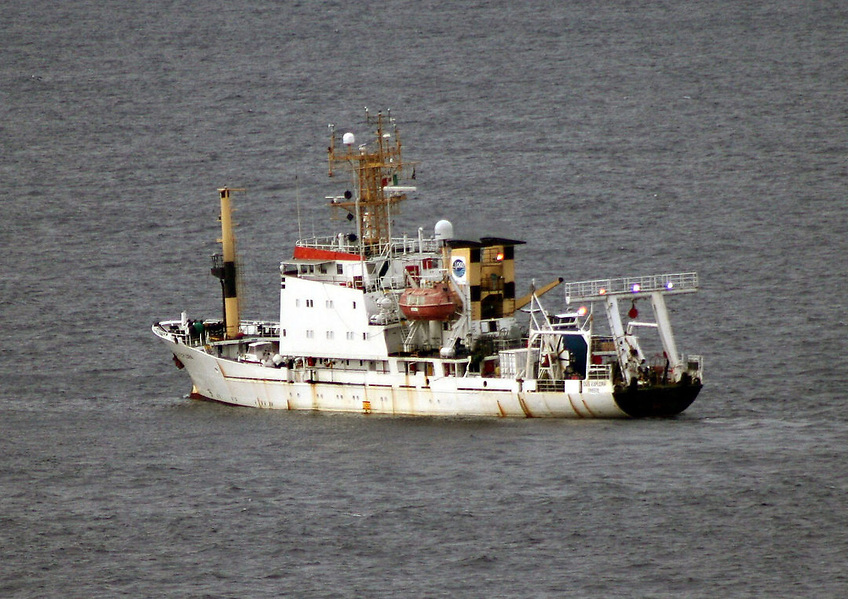
The Department of Transport has been advised that a geophysical and geotechnical survey will be undertaken by Elettra TLC SpA in the Atlantic Ocean off the coast of Co Galway, on behalf of Deepsea Fibre Networks Ltd. Survey works will…


























