
























Menu

Ireland's sailing, boating & maritime magazine

RBC Brewin Dolphin proudly supporting Afloat and Irish Boating

AfloatDigi 2018 CHMarine SafetySection

UK PLB Registration Rules To Boost Rescue Response

1st April 2026
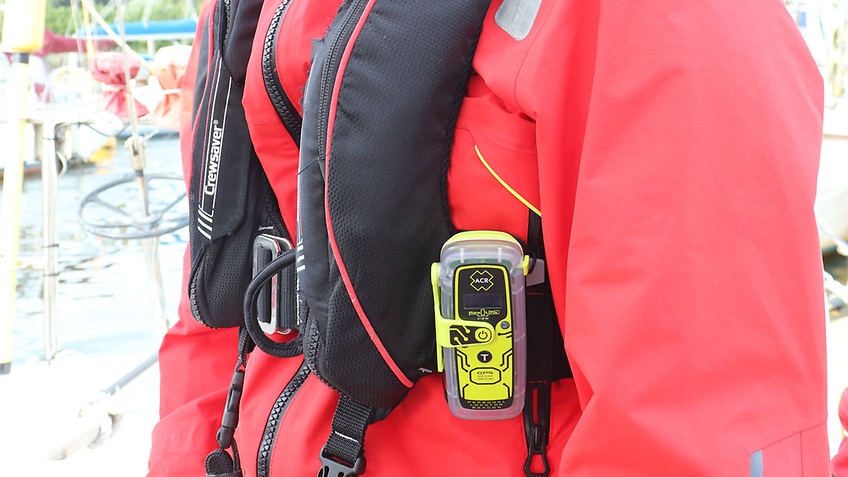
Signal Ready — New UK rules require all Personal Locator Beacons on powered craft to be registered from 15 April, helping Coastguard teams respond faster and reduce false emergency alerts.
Signal Ready — New UK rules require all Personal Locator Beacons on powered craft to be registered from 15 April, helping Coastguard teams respond faster and reduce false emergency alerts

The Maritime and Coastguard Agency will introduce new registration rules for Personal Locator Beacons (PLBs) from 15 April. All PLBs carried on UK-flagged vessels and powered watercraft must be registered online at no cost. The move aligns PLB rules with those already in place for Emergency Position Indicating Radio Beacons (EPIRBs).

Officials said registration will improve search-and-rescue response by providing vital information during emergencies. When activated, beacon data allows HM Coastguard to access emergency contacts and vessel details. This helps direct the correct response and reduces delays.

The agency said unregistered beacons have led to unnecessary searches in recent years. In one case, alerts from London triggered multiple responses, but no distress was found. Another incident saw a discarded beacon prompt a two-hour search before being traced to a recycling centre.

UK Beacon Registry Manager Linda Goulding said: “The registration process is free, takes just 15 minutes, and could make the difference between life and death.” She added, “Registering your PLB helps us quickly work out when it’s a false alarm or when people need urgent help.”

The requirement does not apply to unpowered craft such as kayaks or paddleboards, although voluntary registration is encouraged. Owners must also update details when a beacon is sold or disposed of.


Afloat.ie Team

About The Author

Afloat.ie Team

Email The Author

Afloat.ie is Ireland's dedicated marine journalism team.

Have you got a story for our reporters? Email us here.

We've got a favour to ask

More people are reading Afloat.ie than ever thanks to the power of the internet but we're in stormy seas because advertising revenues across the media are falling fast. Unlike many news sites, we haven't put up a paywall because we want to keep our marine journalism open.

Afloat.ie is Ireland's only full-time marine journalism team and it takes time, money and hard work to produce our content.

So you can see why we need to ask for your help.

If everyone chipped in, we can enhance our coverage and our future would be more secure. You can help us through a small donation. Thank you.

Direct Donation to Afloat button

Every Year Ireland's Search & Rescue Services deliver emergency life saving work on our seas, lakes and rivers.

Ireland's Water Safety Agencies work hard to provide us with the information we need to keep safe, while enjoying all manner of water based activities.

There's no better fun than getting out on the water but being afloat is a responsibility we all need to take seriously.

These pages detail the work of the rescue agencies. We also aim to promote safety standards among pleasure boaters, and by doing so, prevent, as far as possible, the loss of life at sea and on inland waters. If you have ideas for our pages we'd love to hear from you. Please email us at [email protected]

Think Before You Sink - Wear a Lifejacket

Accidents can happen fast on water and there may not be time to reach for a lifejacket in an emergency therefore don't just carry a lifejacket - wear it; if it's not on you, it can't save your life.

Irish Water Safety's Safe Boating Alert:

Check condition of boat and equipment, hull, engine, fuel, tools, torch.

Check the weather forecast for the area.

Check locally concerning dangerous currents and strong tides.

Do not drink alcohol while setting out or during your trip.

Carry an alternative means of propulsion e.g. sails and oars or motor and oars.

Carry a first aid kit on board and distress signals (at least two parachute distress rockets, two red hand flares).

Carry a fire extinguisher, a hand bailer or bucket with lanyard and an anchor with rope attached.

Carry marine radio or some means of communication with shore.

Do not overload the boat - this will make it unstable.

Do not set out unless accompanied by an experienced person.

Leave details of your planned trip with someone ashore - including departure and arrival times, description of boat, names of persons on board, etc.

Wear a Lifejacket at all times.

Keep an eye on the weather - seek shelter in good time.

In Marine Emergencies, call 999 or 112 and ask for Marine Rescue.

Lifejackets Checklist

Ensure Cartridges have not been punctured and are secured firmly.

Ensure all zips, buckles, fasteners and webbing straps are functioning correctly and adjusted to fit the user.

Check that fitted lights are operating correctly.

Ensure that Automatic Inflation devices are fully serviced and in date.

Check that the valve or lifejacket is not leaking.




















