
























Menu

Ireland's sailing, boating & maritime magazine

RBC Brewin Dolphin proudly supporting Afloat and Irish Boating

Brittany Ferries to Increase Capacity on Rosslare-Cherbourg Route Following Competitor Exit

5th August 2025
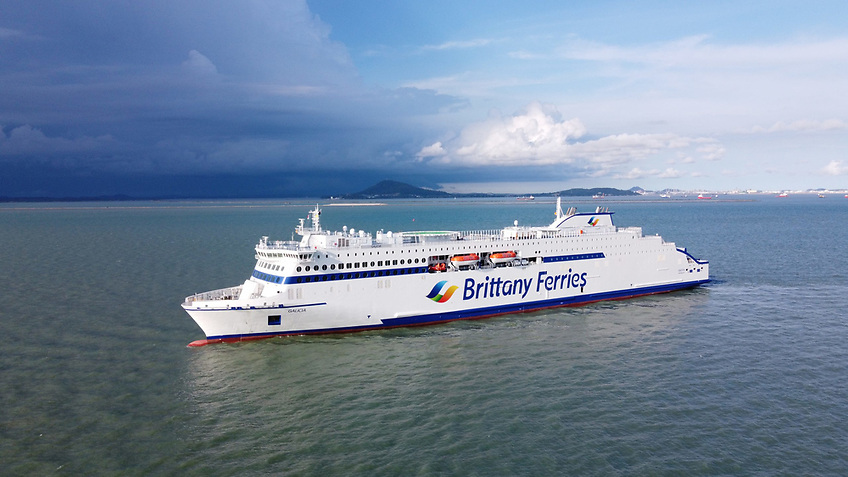
Galicia will serve Brittany Ferries with increased capacity during the winter months following Stena’s withdrawal from the Rosslare-Cherbourg route at the end of next month.
Galicia will serve Brittany Ferries with increased capacity during the winter months following Stena’s withdrawal from the Rosslare-Cherbourg route at the end of next month. Credit: Brittany Ferries

Brittany Ferries has confirmed it will step in to fill an Ireland-France gap left by a competitor’s withdrawal from the Rosslare-Cherbourg route next month.

The French company, which has operations based in Cork and Rosslare Europort, will increase both capacity and frequency of sailings departing Rosslare from the end of September when Stena Line withdraws their service.

The Swedish company instead will focus resources on its Irish Sea routes between Ireland and Britain. The last sailing on the direct continental route Afloat highlights will be from Cherbourg on 29 September.

Departures with Brittany Ferries will rise from five to seven every week. This means a daily trip by the operator from Rosslare Europort, starting October 2025.

The move includes a new Tuesday evening departure at 21:00, with additional sailings to be phased in as part of a broader strengthening of the route. Full schedules will be published shortly; in the meantime, Brittany Ferries says it is ready to boost business continuity for Irish hauliers—and to offer more choice to holidaymakers.

This announcement reflects the close partnership of Brittany Ferries with Rosslare Europort, as well as the Port of Cherbourg in Normandy. The company says long-term investment will strengthen trade links between Ireland and France while offering modern ships, comfort, and a dependable alternative to air travel for passengers.

“Brittany Ferries is a company that prides itself on its ability to move quickly when opportunity knocks,” said Christophe Mathieu, CEO of Brittany Ferries. “News that our competitor was stepping back started the firing pistol in a concerted effort to secure port slots and better serve customers in Ireland and France.”

“I am delighted that we are able to confirm this increase in capacity on the Cherbourg-Rosslare route and thank Rosslare Europort and the Port of Cherbourg for their support. It means greater choice for holidaymakers and even more opportunity for freight operators seeking to bypass the UK entirely, cutting down on bureaucracy and delays at the UK border. Our new (freight) train connection in Cherbourg only adds further strings to the multimodal bow.”

The company’s first train service, christened Ro-Ro Rail, is a further development in its route network. It connects Ireland with the Iberian Peninsula via ferry and rail by linking Cherbourg and Bayonne (in southwest France), carrying unaccompanied trailers over 970 km of the country’s rail network. Fewer emissions, competitive rates, and no need for accompanying drivers are key benefits.

Brittany Ferries launched a Rosslare to Cherbourg service in 2021 as a post-Brexit response to demand from hauliers to obviate the need to cross the UK land bridge when moving freight between Ireland and France. Recently, third, fourth, and fifth weekly return sailings had been added to the menu, as demand continued to rise.

Passenger and freight figures show the seaborne connection is ripe for further development. Passenger volumes have soared nearly 40% this year. Freight units have doubled. The capacity boost is also good news for seafarers, as several ships scheduled to be taken out of service over the winter are now expected to serve the Rosslare-Cherbourg expansion.

Galicia, for example, the first of five (E-Flexer class) ships that joined the Brittany Ferries fleet in 2020, will serve Rosslare-Cherbourg throughout the winter, rather than being tied up. While the flagship Pont-Aven will also continue to sail during part of the winter period, after the company initially planned to lay the cruiseferry over.


Published in Ferry
Jehan Ashmore

About The Author

Jehan Ashmore

Email The Author

Jehan Ashmore is a marine correspondent, researcher and photographer, specialising in Irish ports, shipping and the ferry sector serving the UK and directly to mainland Europe. Jehan also occasionally writes a column, 'Maritime' Dalkey for the (Dalkey Community Council Newsletter) in addition to contributing to UK marine periodicals. 

We've got a favour to ask

More people are reading Afloat.ie than ever thanks to the power of the internet but we're in stormy seas because advertising revenues across the media are falling fast. Unlike many news sites, we haven't put up a paywall because we want to keep our marine journalism open.

Afloat.ie is Ireland's only full-time marine journalism team and it takes time, money and hard work to produce our content.

So you can see why we need to ask for your help.

If everyone chipped in, we can enhance our coverage and our future would be more secure. You can help us through a small donation. Thank you.

Direct Donation to Afloat button

Ferry & Car Ferry News The ferry industry on the Irish Sea, is just like any other sector of the shipping industry, in that it is made up of a myriad of ship operators, owners, managers, charterers all contributing to providing a network of routes carried out by a variety of ships designed for different albeit similar purposes.

All this ferry activity involves conventional ferry tonnage, 'ro-pax', where the vessel's primary design is to carry more freight capacity rather than passengers. This is in some cases though, is in complete variance to the fast ferry craft where they carry many more passengers and charging a premium.

In reporting the ferry scene, we examine the constantly changing trends of this sector, as rival ferry operators are competing in an intensive environment, battling out for market share following the fallout of the economic crisis. All this has consequences some immediately felt, while at times, the effects can be drawn out over time, leading to the expense of others, through reduced competition or takeover or even face complete removal from the marketplace, as witnessed in recent years.

Arising from these challenging times, there are of course winners and losers, as exemplified in the trend to run high-speed ferry craft only during the peak-season summer months and on shorter distance routes. In addition, where fastcraft had once dominated the ferry scene, during the heady days from the mid-90's onwards, they have been replaced by recent newcomers in the form of the 'fast ferry' and with increased levels of luxury, yet seeming to form as a cost-effective alternative.

Irish Sea Ferry Routes

Irrespective of the type of vessel deployed on Irish Sea routes (between 2-9 hours), it is the ferry companies that keep the wheels of industry moving as freight vehicles literally (roll-on and roll-off) ships coupled with motoring tourists and the humble 'foot' passenger transported 363 days a year.

As such the exclusive freight-only operators provide important trading routes between Ireland and the UK, where the freight haulage customer is 'king' to generating year-round revenue to the ferry operator. However, custom built tonnage entering service in recent years has exceeded the level of capacity of the Irish Sea in certain quarters of the freight market.

A prime example of the necessity for trade in which we consumers often expect daily, though arguably question how it reached our shores, is the delivery of just in time perishable products to fill our supermarket shelves.

A visual manifestation of this is the arrival every morning and evening into our main ports, where a combination of ferries, ro-pax vessels and fast-craft all descend at the same time. In essence this a marine version to our road-based rush hour traffic going in and out along the commuter belts.

Across the Celtic Sea, the ferry scene coverage is also about those overnight direct ferry routes from Ireland connecting the north-western French ports in Brittany and Normandy.

Due to the seasonality of these routes to Europe, the ferry scene may be in the majority running between February to November, however by no means does this lessen operator competition.

Noting there have been plans over the years to run a direct Irish –Iberian ferry service, which would open up existing and develop new freight markets. Should a direct service open, it would bring new opportunities also for holidaymakers, where Spain is the most visited country in the EU visited by Irish holidaymakers ... heading for the sun!




















