
























Menu

Ireland's sailing, boating & maritime magazine

RBC Brewin Dolphin proudly supporting Afloat and Irish Boating

Major Disruption as All Rosslare-South Wales Routes Have 'No' Ferry Services

7th December 2025
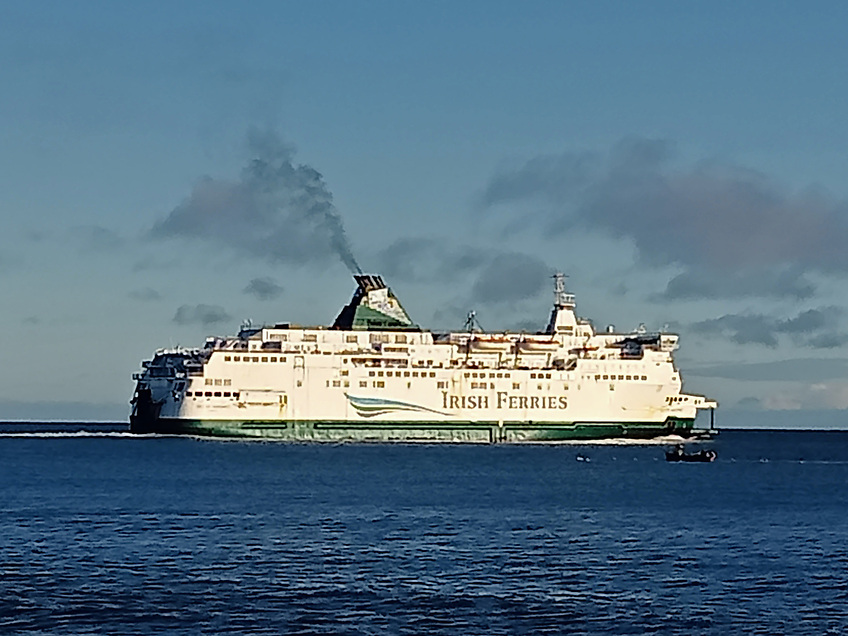
Major disruption: Since the early hours of Saturday morning, no sailings have taken place on Ireland-South Wales routes between Rosslare and Pembroke Dock (Irish Ferries) and Rosslare-Fishguard (Stena Line). The disruption has resulted in passengers and freight having to divert to other routes due to a combination of adverse weather conditions, operational reasons, ferry reshuffles, and routine annual dry-dockings (among them of the above Isle of Innisfree as captured last month bound for Pembroke). The next nearest alternative route is Dublin-Holyhead, where the port in North Wales has been beset again, as last week damage was caused to one of two ferry terminals,  so the port remains open, albeit partially.
Major disruption: Since the early hours of Saturday morning, no sailings have taken place on Ireland-South Wales routes between Rosslare and Pembroke Dock (Irish Ferries) and Rosslare-Fishguard (Stena Line). The disruption has resulted in passengers and freight having to divert to other routes due to a combination of adverse weather conditions, operational reasons, ferry reshuffles, and routine annual dry-dockings (among them of the above Isle of Innisfree as captured last month bound for Pembroke). The next nearest alternative route is Dublin-Holyhead, where the port in North Wales has been beset again, as last week damage was caused to one of two ferry terminals, so the port remains open, albeit partially. Credit: Jehan Ashmore

Last night an Irish Ferries cruise ferry, Isle of Innisfree, was tracked underway on the English Channel, having departed Dunkirk (East) and fresh from planned dry-docking, bound for the Irish Sea to resume routine sailings, writes Jehan Ashmore.

The former Strait of Dover serving ferry, at midnight was offshore of Dungeness, Kent, and according to the Irish Ferries sailing update, the Isle of Innisfree was to return to service but from Pembroke in the early hours of this morning for the scheduled 0245 sailing, but that was not possible given the lack of time to cover the repositioning voyage to South Wales.

Since then the sailing update was revised, and, at the time of writing this morning, there was a new re-entry into service of the Isle of Innisfree, but later and instead departing from Rosslare this morning at 0845. Once again, this timing cannot be achieved, as Afloat tracked Isle of Innisfree this morning still in the English Channel between the Cotentin Peninsula, France, and Portland Bill, Dorset. 

According to AIS, the cruise ferry is bound for the Irish Sea but for Pembroke Dock, with an estimated arrival at the South Wales port tonight at 2100.

Afloat has sought a comment from Irish Ferries for the delayed return of the cruise ferry, as this is a major disruption on the southern Irish Sea, as since Friday’s early morning sailing by relief ferry James Joyce to Rosslare, was the only and last sailing to take place between Ireland and South Wales before adverse weather set in, forcing all sailings to be cancelled. (In an update this afternoon, Afloat adds) a statement from Irish Ferries said the 0845 hrs sailing this morning, Rosslare-Pembroke, was cancelled due to adverse weather conditions. 

In addition, the same reason last night was given by Stena Line on their Rosslare-Fishguard route, but due to the temporary space-charter agreement with Irish Ferries, passengers have been automatically transferred to the competitor, as Fishguard had no ferry due to planned dry-docking of the routine ropax Stena Nordica.

But of course this route out of Pembroke Dock was not an option either, as the routes remain severely disrupted to passengers and freight. 

The charter of the Isle of Man Steam Packet’s reserve ropax ferry Ben-my-Chree to Stena was to cease midweek; however, this did not occur due to adverse weather, as the small ropax ferry left earlier than scheduled on the Dublin-Holyhead route (space chartered to Irish Ferries) on Saturday morning and returned to the Manx owners that same day.

This led to the non-reappearance of the ‘Ben’ to Rosslare-Fishguard as originally planned since last week for several days, allowing Irish Ferries James Joyce to return to Dublin-Holyhead with the return of the dry-docked Isle of Innisfree, but as outlined, delays took place, leading to a knock-on effect of cancelled sailings on the route as outlined below. As this did not occur, James Joyce returned to Holyhead on Saturday to resume routine service, given that the 'Ben' as alluded to returned to Douglas the same day.  

However, on the preceding day (Friday), the North Wales port was again beset by damage to one of its terminals (T5) following a "berthing incident" caused by severe weather conditions, as reported by BBC News yesterday. The port remains partially open, as its second berth (T3) (see related Storm Darragh story) remains operational. The port authority said it will remain temporarily closed to ensure safety but added the port "continues to facilitate the full sailing schedule for ferry operators."

According to Stena Line’s sailing update this morning, the next scheduled sailing by Stena Nordica is from Fishguard this evening at 1930; however, under sailing status is given ‘No sailing.’ Further information outlined by the company stated: We are sorry to advise that the 19:30 sailing on Monday the 8th is cancelled due to operational reasons. You can amend your booking online to an alternative sailing or route without any change fee or fare difference applied, etc.

Likewise with such disruption, Afloat has also sought a comment from Stena as to the delay in the return of the ropax on the Rosslare-Fishguard route.

It is not surprising, given the current sailing status, as the Stena Nordica continues to remain in dry dock at Cammell Laird, Birkenhead, where it entered the facility on Merseyside last month, following a relief stint role on the Dublin-Holyhead route.


Jehan Ashmore

About The Author

Jehan Ashmore

Email The Author

Jehan Ashmore is a marine correspondent, researcher and photographer, specialising in Irish ports, shipping and the ferry sector serving the UK and directly to mainland Europe. Jehan also occasionally writes a column, 'Maritime' Dalkey for the (Dalkey Community Council Newsletter) in addition to contributing to UK marine periodicals. 

We've got a favour to ask

More people are reading Afloat.ie than ever thanks to the power of the internet but we're in stormy seas because advertising revenues across the media are falling fast. Unlike many news sites, we haven't put up a paywall because we want to keep our marine journalism open.

Afloat.ie is Ireland's only full-time marine journalism team and it takes time, money and hard work to produce our content.

So you can see why we need to ask for your help.

If everyone chipped in, we can enhance our coverage and our future would be more secure. You can help us through a small donation. Thank you.

Direct Donation to Afloat button

Ferry & Car Ferry News The ferry industry on the Irish Sea, is just like any other sector of the shipping industry, in that it is made up of a myriad of ship operators, owners, managers, charterers all contributing to providing a network of routes carried out by a variety of ships designed for different albeit similar purposes.

All this ferry activity involves conventional ferry tonnage, 'ro-pax', where the vessel's primary design is to carry more freight capacity rather than passengers. This is in some cases though, is in complete variance to the fast ferry craft where they carry many more passengers and charging a premium.

In reporting the ferry scene, we examine the constantly changing trends of this sector, as rival ferry operators are competing in an intensive environment, battling out for market share following the fallout of the economic crisis. All this has consequences some immediately felt, while at times, the effects can be drawn out over time, leading to the expense of others, through reduced competition or takeover or even face complete removal from the marketplace, as witnessed in recent years.

Arising from these challenging times, there are of course winners and losers, as exemplified in the trend to run high-speed ferry craft only during the peak-season summer months and on shorter distance routes. In addition, where fastcraft had once dominated the ferry scene, during the heady days from the mid-90's onwards, they have been replaced by recent newcomers in the form of the 'fast ferry' and with increased levels of luxury, yet seeming to form as a cost-effective alternative.

Irish Sea Ferry Routes

Irrespective of the type of vessel deployed on Irish Sea routes (between 2-9 hours), it is the ferry companies that keep the wheels of industry moving as freight vehicles literally (roll-on and roll-off) ships coupled with motoring tourists and the humble 'foot' passenger transported 363 days a year.

As such the exclusive freight-only operators provide important trading routes between Ireland and the UK, where the freight haulage customer is 'king' to generating year-round revenue to the ferry operator. However, custom built tonnage entering service in recent years has exceeded the level of capacity of the Irish Sea in certain quarters of the freight market.

A prime example of the necessity for trade in which we consumers often expect daily, though arguably question how it reached our shores, is the delivery of just in time perishable products to fill our supermarket shelves.

A visual manifestation of this is the arrival every morning and evening into our main ports, where a combination of ferries, ro-pax vessels and fast-craft all descend at the same time. In essence this a marine version to our road-based rush hour traffic going in and out along the commuter belts.

Across the Celtic Sea, the ferry scene coverage is also about those overnight direct ferry routes from Ireland connecting the north-western French ports in Brittany and Normandy.

Due to the seasonality of these routes to Europe, the ferry scene may be in the majority running between February to November, however by no means does this lessen operator competition.

Noting there have been plans over the years to run a direct Irish –Iberian ferry service, which would open up existing and develop new freight markets. Should a direct service open, it would bring new opportunities also for holidaymakers, where Spain is the most visited country in the EU visited by Irish holidaymakers ... heading for the sun!