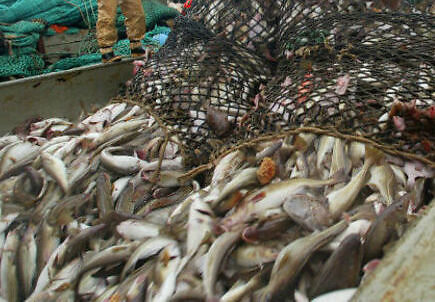
Ella McSweeney, writing in The Irish Times Weekend, reports growing concern over Ireland’s failure to safeguard its most valuable fish.
On RTÉ’s Prime Time, Wexford fisherman Seamus O’Flaherty said people in Kilmore had prospered since the 1840s “on fish that they caught”. He criticised the Government’s plan to legally protect 30 per cent of Ireland’s maritime waters by 2030.
Scientists warn that decades of overfishing have already taken a severe toll. This week the International Council for the Exploration of the Sea advised a 70 per cent quota cut for EU mackerel next year, with steep reductions in blue whiting and boarfish.
The mackerel stock in the northeast Atlantic is at its lowest in 20 years. Scientists say this is the result of years of political inaction.
McSweeney reports that experts want protection for so-called “BOFFFFs” – big, old, fat, fecund female fish. These larger females lay more eggs over longer spawning periods and their offspring are more likely to survive. One 66lb cod can produce more eggs than 28 smaller fish.
But the industry targets the largest fish first, leaving fewer big breeders in the water. This weakens population stability and increases collapse risk.
Scientists argue that marine protected areas (MPAs), especially “no-take zones”, boost fish stocks and coastal economies. Studies in 31 countries found that MPAs led to profits, tourism growth and stock restoration. “There is, unequivocal, evidence” restricting fishing improves catches overall, says Irish marine scientist Mark John Costello.
MPAs increase fish size by an average of 28 per cent. Egg production can rise by up to 40 times, with catches up to a third higher outside protected zones. McSweeney notes that sharks and other wildlife also benefit, increasing tourism value.
Examples like Sweden, the western Pacific and New Zealand show higher numbers and larger fish after more than a decade of no-take zones. Costello says the evidence is clear: fish and crustacean populations rebound in both number and size when MPAs are enforced.
Without legal protection, McSweeney reports, Ireland risks the same fate as collapsing mackerel stocks. She writes that only a “fool” ignores the strong economic case for MPAs and argues the industry must face biological reality.
Read more in The Irish Times here